
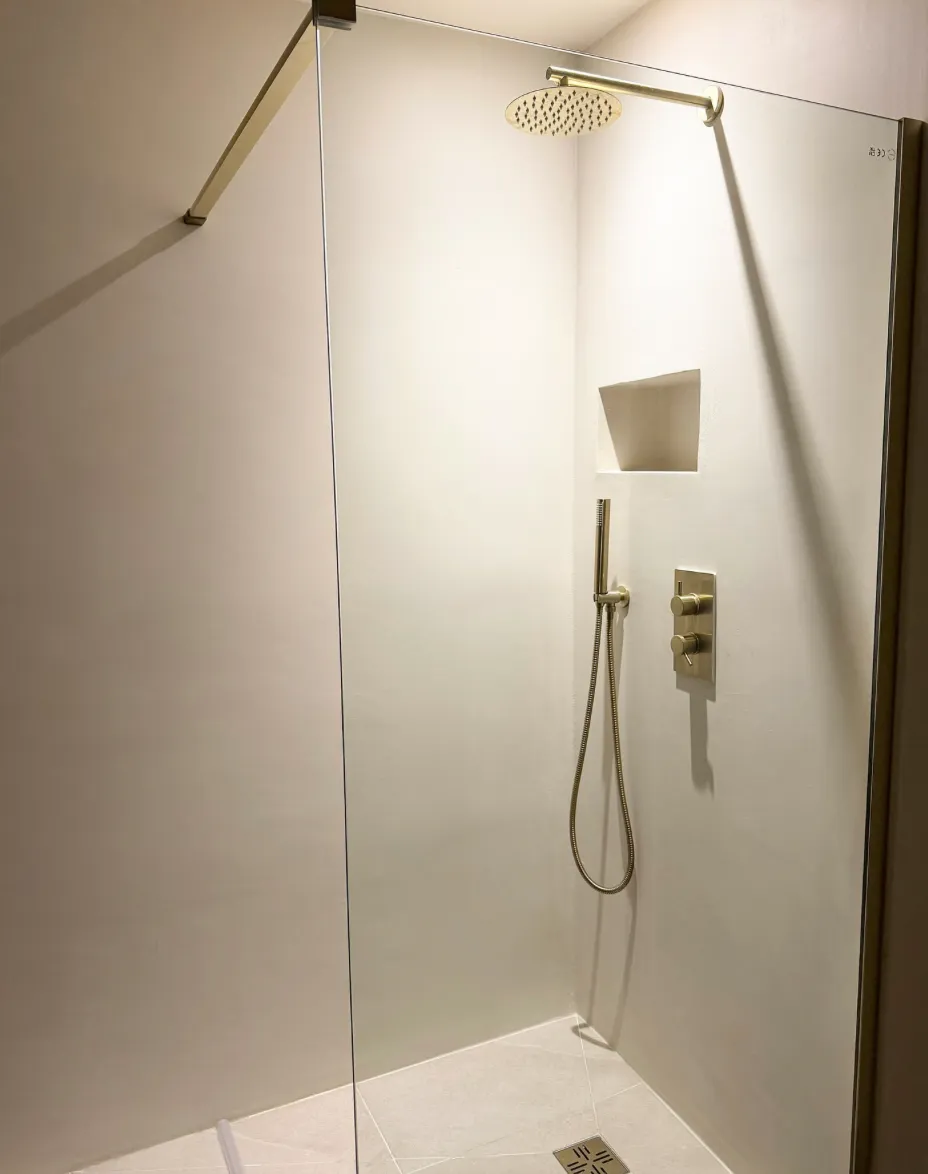
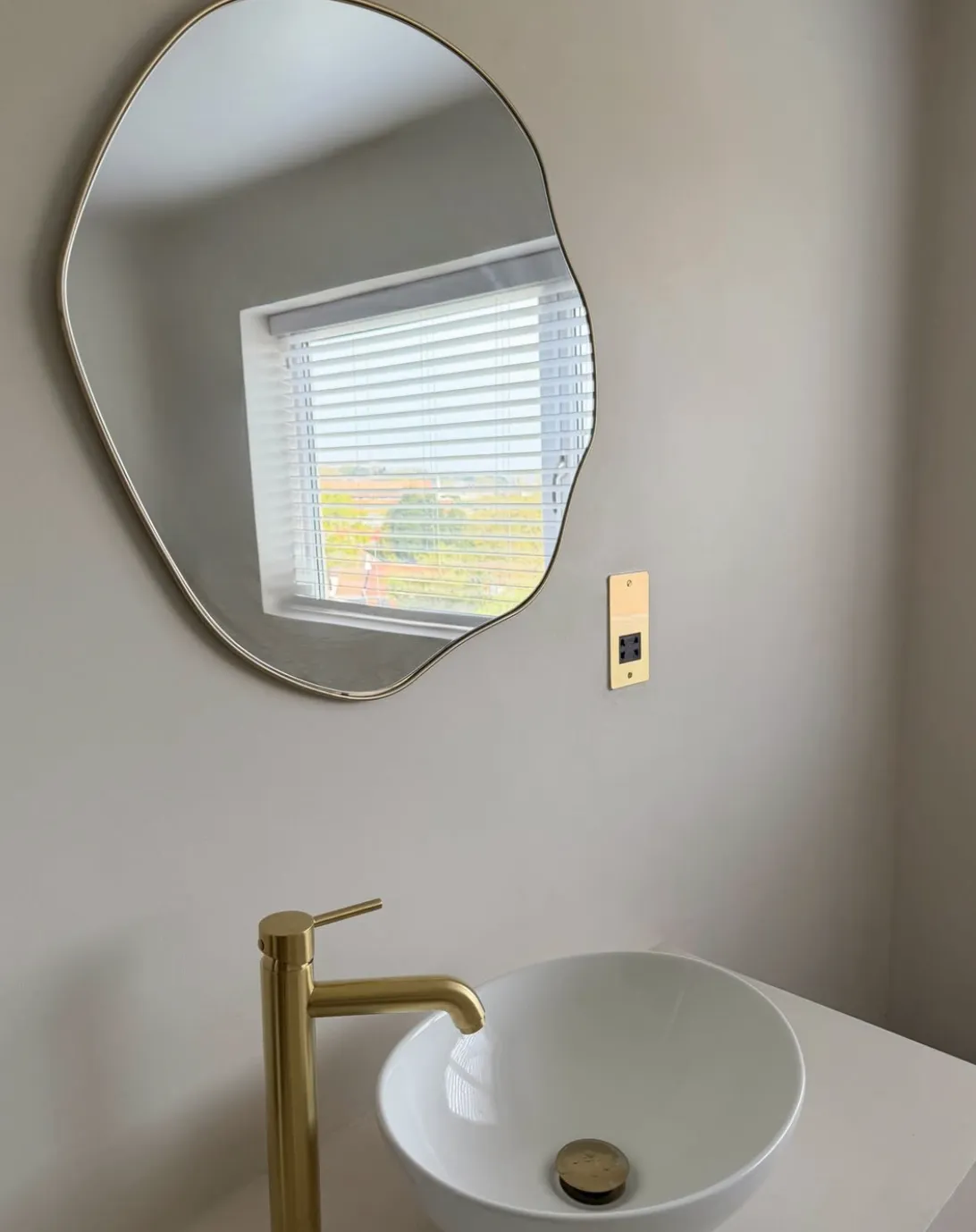
Cement-based wall and floor finishes have been used for thousands of years — the Romans applied polished lime plasters, and hand-trowelled renders have coated buildings across Europe for centuries. But microcement as we know it today is a far more recent invention, born in Spain in the early 1980s.
Craftsmen in Valencia and Barcelona began experimenting with polymer-modified cement compounds — thin, flexible coatings that could be applied directly over existing surfaces without the need to remove tiles or hack back plaster. The result was a material that combined the durability of concrete with the finesse of a decorative finish. Early applications were almost entirely commercial: hotel lobbies, restaurants, and retail spaces where a seamless, industrial aesthetic was coming into fashion.
Through the 1990s and into the 2000s, the material spread across Europe — particularly into France and Italy — carried by architects and interior designers looking for a contemporary alternative to polished concrete. The formulas improved steadily: better adhesion, greater flexibility, and improved waterproofing meant microcement could move from commercial floors into wet residential spaces like bathrooms and kitchens.
The real turning point came in the 2010s. As industrial-inspired interiors entered the mainstream and social media brought design trends to a wider audience, demand for seamless, grout-free finishes exploded. Microcement became the material of choice for renovation projects — its ability to go over existing surfaces without demolition made it uniquely suited to the growing appetite for home transformation without the disruption of a full rebuild.
Today, microcement is used in homes, hotels, offices, and retail spaces across the world. What started as a niche Spanish craft technique is now one of the most sought-after surface finishes in contemporary design — and it's arrived in Wales.
Developed in Valencia and Barcelona as a polymer-modified cement coating for commercial spaces.
Spreads across Europe. Architects adopt it for restaurants, hotels, and retail interiors.
Improved formulas enable waterproof applications. Microcement enters the residential bathroom.
Industrial design trends drive mainstream adoption. Renovation boom fuels global demand.
A benchmark finish in contemporary design — seamless, durable, and applied right here in Wales.